



'/%3E%3C/svg%3E)


Government, Public Entities and Health Section

The Government, Public Entities and Health Section was established in 1943 and incorporated civil servants. It extended from manual to clerical workers. The first Collective Agreement for Public Service employees was negotiated with the Government and signed on the 14th December 1998, but came into force retroactively in 1996.
The Government, Public Entities and Health Section was established in 1943 and incorporated civil servants. It extended from manual to clerical workers. The first Collective Agreement for Public Service employees was negotiated with the Government and signed on the 14th December 1998, but came into force retroactively in 1996.
Workers within the public administration have a regulatory framework for them. These conditions, benefits and duties derive from the Public Administration Act (Chapter 497 of the laws of Malta) and the regulations of the Public Service Commission and from the Public Service Management Code. In addition, there is a general Collective Agreement, and it is negotiated with seven unions at once, including the Section and several Sectoral Agreements. They cover different classes of workers and careers.
Throughout the years, the Section began negotiating various Collective Agreements covering authorities, public entities, and regulators.
Nowadays, the Section represents employees within various sectors, including:
- The Public Service
- The Public Sector
- Nowadays, the Section represents employees within various sectors, including:
- Corporations
- Authorities
- Regulators
The Section represents member workers ranging from manual workers to professionals, both on a full-time or part-time basis, on indefinite contracts or definite contracts. The Section represents its members, negotiates for them, and proposes proposals in the budget aiming to strengthen the rights of its working members.
What does the GWU – Government and Public Entities Section do?
- Represents the members
Our representatives are the essential link between the members of the GWU and the Union. They work closely with the members they represent, aiming to strengthen working conditions and raise awareness of both the workplace and national situations. - Negotiations
Negotiating and bargaining are the processes where the Union discusses and lays the grounds for better worker conditions with the employers. - Campaign
The campaign is part of our method to raise awareness of issues, strengthen the conditions of our member workers and gather support for local and international issues. - Fair Justice and Equality
One of the GWU’s main goals is to help members achieve justice and equality in the workplace and beyond. The challenge against discrimination and winning equality is at the heart of everything the GWU does.










News and Section Updates
- GWU signs new Collective Agreement for employees of the Superintendence of Cultural Heritage
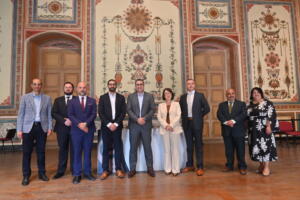 Substantial improvements in salaries and working conditions, greater flexibility and new opportunities for… Read more: GWU signs new Collective Agreement for employees of the Superintendence of Cultural Heritage
 - GWU declares Industrial Dispute at Dar Emmaus
 Union issues directives to care staff and insists that employees should not be… Read more: GWU declares Industrial Dispute at Dar Emmaus
 - The economy and Malta Vision 2050 at the centre of discussions
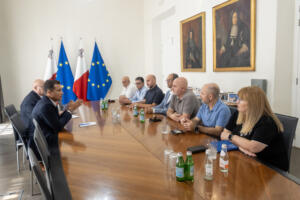 Economic transformation and Malta Vision 2050 were at the centre of discussions during… Read more: The economy and Malta Vision 2050 at the centre of discussions
 - GWU and Dar Emmaus move forward towards Collective Agreement negotiations
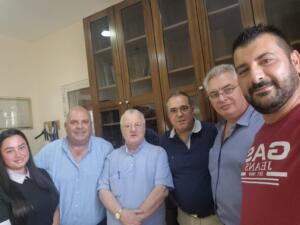 Positive meeting in Xewkija paves the way for dialogue and negotiations between both sides The Government,… Read more: GWU and Dar Emmaus move forward towards Collective Agreement negotiations
 - Ageing – a stage in life to be lived with dignity and the best possible quality of life
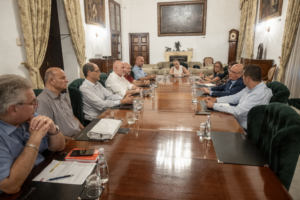 GWU meets Parliamentary Secretary for Active Ageing Deo Debattista The General Workers’ Union… Read more: Ageing – a stage in life to be lived with dignity and the best possible quality of life