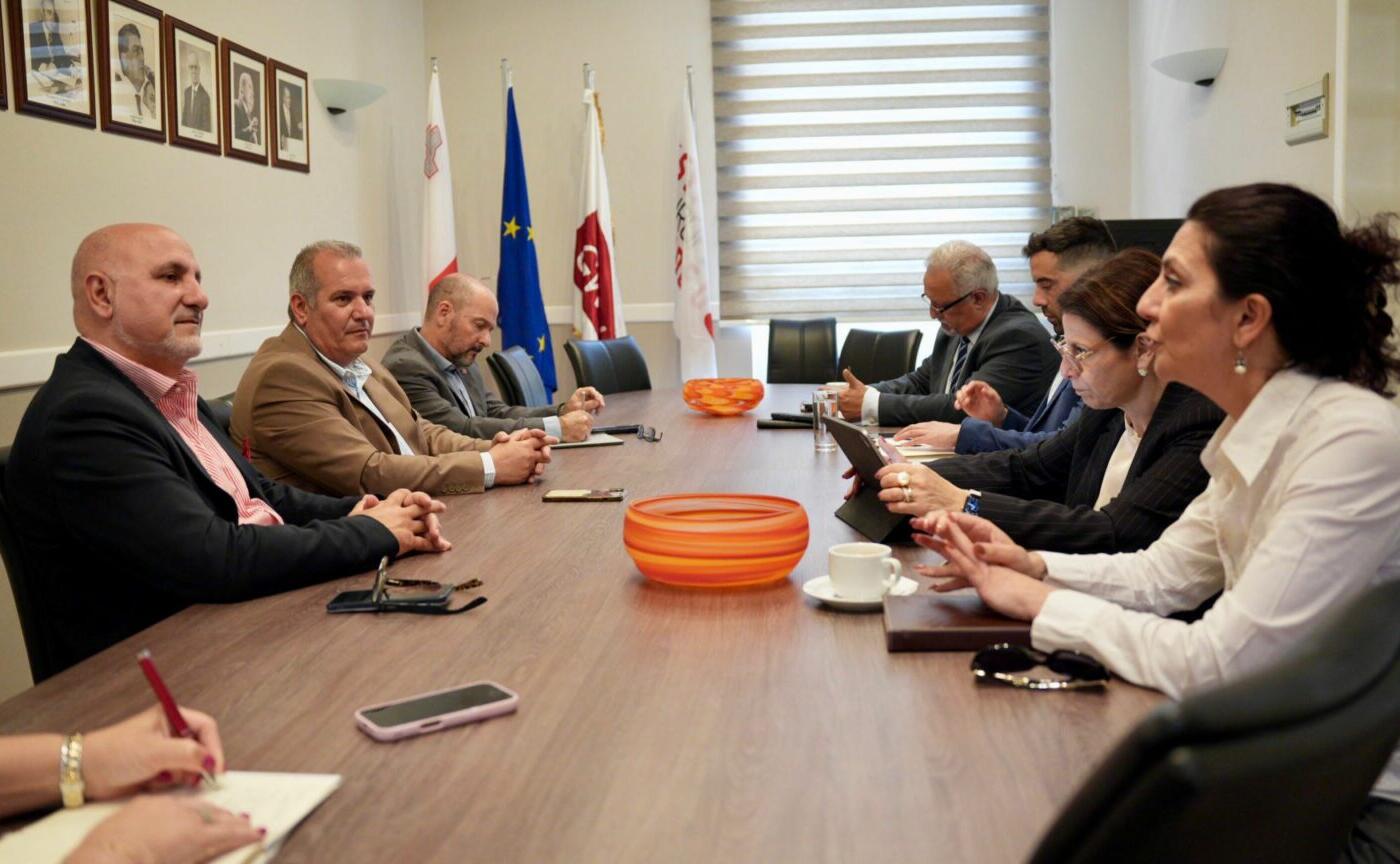
During a meeting between the General Workers’ Union (GWU) administration and the Work–Life Balance Committee, several proposals were discussed aimed at improving workers’ well-being, strengthening work–life balance policies, and modernising administrative processes.
Participants focused their discussion on practical solutions to support both employees and employers, with particular emphasis on flexible working arrangements, social initiatives, and more efficient administrative systems.
Ingrid Baldacchino, Chairperson of the Committee, stated in her introduction that these meetings with social partners are being held to gather real and sustainable proposals, which will later be forwarded to the Government.
Among the key points discussed were the strengthening of work–life balance policies to provide greater support to workers and their families, remote working and more flexible working arrangements, as well as improvements in maternity, paternity, and parental leave.
“Flexible working must become the norm,” said Josef Bugeja, outgoing Secretary General of the General Workers’ Union, stressing that flexibility in working hours, particularly a 40-hour week spread over four days (the 4-day week), along with widespread remote working, were key GWU proposals already put forward in 2022.
“Today,” Bugeja said, “it is time for these to become the norm as conditions for a working future that better safeguards the balance between work and private life. This way, workers and their families can truly enjoy a better quality of life.”
He added that the COVID-19 pandemic accelerated changes in the world of work and showed that new models such as remote working and flexible hours can operate effectively in many sectors. These measures, he said, should help workers better manage their family and personal commitments while maintaining high productivity levels.
Kevin Camilleri, Secretary General (designate), said he believes that remote working and flexible arrangements, as well as improvements in maternity, paternity, and parental leave, are key pillars that must be strengthened for the benefit of workers and their families.
“I have already stated that the time has come to create a National Social Fund to support workers,” said Kevin Camilleri.
He added that remote working should be based on a hybrid model, as it is not beneficial for a person to work alone from home week after week in isolation.
The meeting also highlighted the need for training and reskilling courses as digitalisation, robotics, and Artificial Intelligence increasingly become part of the workplace, to help workers adapt to new labour market demands. The “right to disconnect” was also discussed, ensuring that workers are able to disconnect from work outside working hours and enjoy a better quality of life with their families and society.
Deputy Secretary General Kevin Abela spoke about the challenges brought by digitalisation and Artificial Intelligence in industrial relations.
“The pillar of social dialogue must continue to be strengthened so that the transition is fair and equitable, with Artificial Intelligence and technology serving to assist rather than replace human resources,” said Kevin Abela.
Also present for the meeting were committee members Maria Micallef, Roderick Cutajar, and Saviour Said.