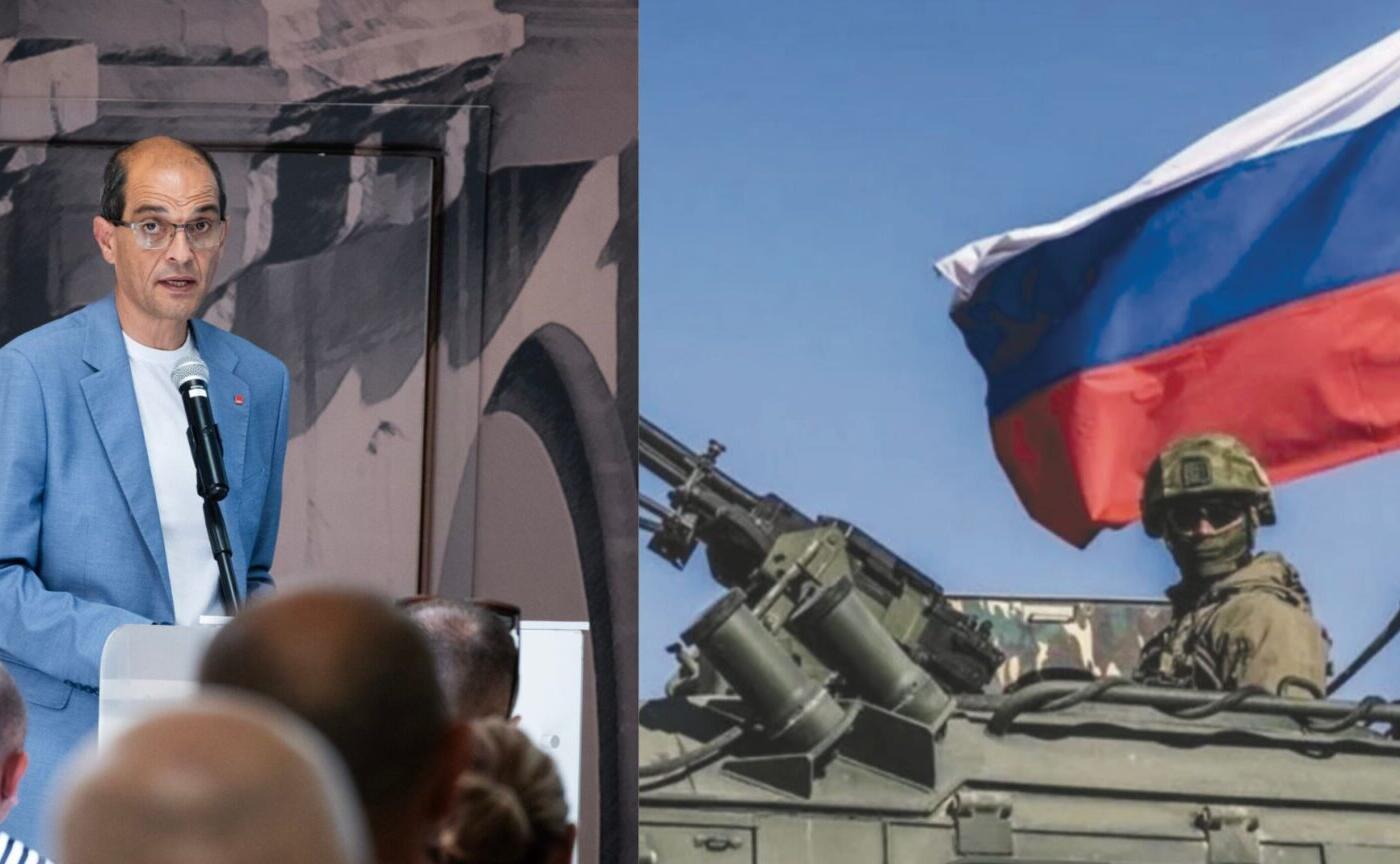
What happens in Russia can hit Maltese workers’ pockets: the Russian elections, energy and the future of subsidies in Malta
GWU President – Jason Deguara
On 18, 19 and 20 September, elections will be held for the Russian Parliament, the State Duma. Although these are not presidential elections, their outcome will be important in understanding the mood in Russia and, above all, the political message that the Kremlin may draw from this electoral process.
For many, this may seem like an issue far removed from Malta. However, in a world where war, energy, the economy and international politics are interconnected, what happens in Moscow can eventually be felt in Brussels and, ultimately, in the everyday lives of Maltese workers and families.
Russia and the future of Europe
Russia remains involved in the war in Ukraine, and the election is taking place under circumstances that are completely different from those of a normal election. The issue is not simply who will secure a majority in the Russian Parliament, but also the extent to which the Kremlin will interpret the result as an endorsement of its policies.
If the result is interpreted as strong support for the current policy, there may be less internal pressure to change the direction of the war. On the other hand, any indication of fatigue or concern among the Russian population could be an important development to watch. The days surrounding the election should therefore be observed not only in terms of percentages and parliamentary seats, but also for their political and economic consequences.
The problem is that Europe is already in a delicate economic position. We cannot say that the European Union is formally in recession, but neither can we ignore the weak growth and uncertainty facing many European economies. European Central Bank projections point to modest growth in the euro area, while inflation and high energy costs remain significant challenges.
All this is happening at a time when families are already feeling pressure on their household budgets and businesses are facing increasingly intense international competition.
For workers, the term “economic growth” means little on its own unless it translates into a better quality of life. What matters to workers is how much food costs, how much it costs to fill up their car, how much they pay for energy and how much money they have left at the end of the month after paying their bills.
The economy may be growing on paper, but if wages fail to keep pace with the cost of living, workers will still feel that they are falling behind. This is why any further increase in energy prices must also be analysed from a social perspective, not merely an economic one.
Energy: from Russia to the pockets of Maltese families
This is where the direct link emerges between what happens in Russia, what happens in Europe and what happens in Malta. Any escalation of the war or greater instability in international markets could put pressure on energy prices.
When energy becomes more expensive, the impact is not limited to electricity bills or fuel prices. Transport costs rise, production becomes more expensive, logistics costs increase and businesses have to deal with higher operating costs. Eventually, part of this burden may be passed on to consumers through higher prices.
Malta, as a small and open economy, cannot control what happens in international markets. We cannot control the international price of oil, we cannot control wars taking place thousands of kilometres away, and we cannot determine on our own what happens in European markets.
What we can do is prepare ourselves and put in place the policies needed to protect our people when international shocks occur.
This is why energy and fuel subsidies are so important. Too often, the discussion about subsidies focuses solely on how much they cost the Government. Naturally, this is an important consideration. Public finances must be sustainable, and every euro spent from public funds must be considered responsibly.
But we must also look at the other side of the coin. We need to ask ourselves what the cost would be if we did not have these protection mechanisms in place when international prices rise sharply.
For a family already paying rent or a home loan, food, transport, education and other everyday expenses, a substantial increase in energy prices could suddenly mean that its household budget no longer stretches far enough. For a worker who needs a car to get to work, an increase in fuel prices is not simply an economic statistic. It is a direct expense that has to be paid.
Subsidies: protection for workers, but at a cost to the country
This is why it is crucial to view subsidies as part of a broader policy of economic and social protection. A subsidy should not be seen merely as an expense. In times of crisis, it can be a tool for maintaining stability, protecting purchasing power and preventing an international shock from turning into a domestic social crisis.
At the same time, we must be realistic. Subsidies come at a cost, and that cost cannot be ignored. If international prices remain high for a prolonged period, the burden on public finances increases. If European economic growth is weak at the same time, the challenge becomes even greater. If Government revenue does not grow at the same pace as expenditure, greater prudence and planning will be required.
This is precisely why we should not wait for another crisis to erupt before we start thinking about these issues. We need to ask now whether the country has sufficient fiscal space to continue protecting families in the event of another energy shock. We need to ask whether the current system is sustainable in the long term. And we need to consider what investment is required to make Malta less exposed to increases in international prices.
We must avoid finding ourselves in a situation where, after families have become accustomed to a certain level of protection, a new crisis forces the country to take sudden and difficult decisions. The best policy is one that prepares in advance rather than one that reacts only when the problem is already upon us.
In every crisis, workers must come first
This is not merely a discussion about public finances. It is a discussion about workers.
If energy prices are allowed to rise unchecked, the burden will eventually reach families. If inflation accelerates again, workers will need greater wage protection. If businesses face higher costs, they will come under greater pressure to maintain their competitiveness. And if the European economy enters a period of stagnation or recession, jobs and investment could also come under pressure.
This is why the protection of workers must be at the heart of every decision. We cannot tell workers that international energy prices are their problem. We cannot tell families that they must bear alone the consequences of a war they did not create. Nor can we expect businesses to absorb rising costs indefinitely without consequences for competitiveness and employment.
This does not mean that every problem should be solved through subsidies. It means that the State must have the necessary tools to intervene when an extraordinary shock occurs and to protect those who are most vulnerable.
At the same time, we must invest in solutions that make Malta more resilient in the long term. Renewable energy, energy efficiency, investment in infrastructure and reducing dependence on external sources should all form part of a national strategy that does not begin only when a crisis occurs.
Europe also needs an economic policy that puts workers at its centre. We cannot talk only about competitiveness without talking about the cost of energy for families and businesses. We cannot talk only about fiscal discipline without considering the social cost of inadequate protection. And we cannot talk about economic growth if its benefits do not reach workers.
Europe needs investment in energy, industry and infrastructure, but it also needs a strong social policy. Competitiveness and social justice are not enemies. A strong European economy requires workers with purchasing power and families who feel secure.
For Malta, this means that we must continue working to strengthen our economy and public finances while keeping the protection of families and workers as a priority. We cannot control what happens in Moscow, but we can decide how Malta prepares for what may happen.
Ultimately, the Russian elections are far more than a political event taking place thousands of kilometres away. They may provide an indication of the direction the war will take and of the level of instability that the European continent may still have to face. If that instability once again drives up energy prices and further weakens European growth, the consequences could reach us too.
We must therefore be prepared. We must look at subsidies not simply as an expense, but as a tool to protect workers and families. We must view energy as an economic and social issue, not merely a technical one. And we must ensure that, in times of crisis, those who are most vulnerable do not end up paying the highest price.
As the GWU, our position is clear: in times of uncertainty, workers, pensioners and families must remain at the heart of the country’s economic policy, and subsidies must continue to provide the much-needed breathing space.
What happens in Moscow can be felt in Brussels. What happens in Brussels can be felt in Malta. And what happens in the economy can ultimately be felt in the pockets of Maltese workers.











 EN
EN