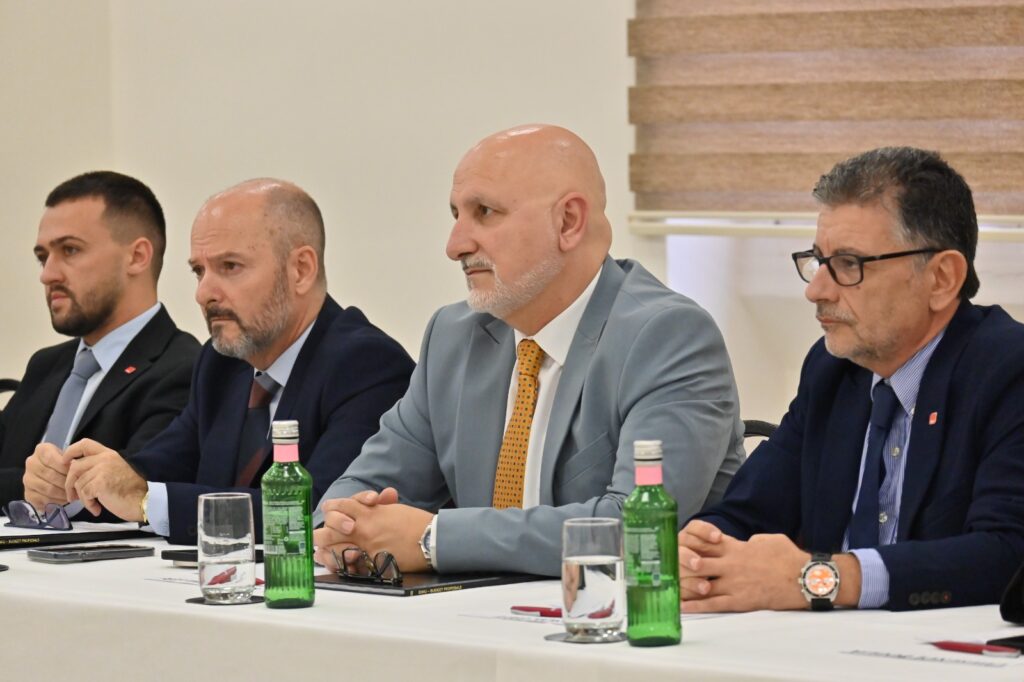
Economic growth must translate into better incomes, quality jobs and strong public services
The General Workers’ Union (GWU) has presented its proposals for Budget 2027, calling for Malta’s economic success to translate into a higher standard of living, stronger rights, quality employment and sustainable public services for all.
GWU Secretary General Kevin Camilleri said: “The Budget should be judged on how far it takes Malta towards a higher-value, higher-wage economy that is socially and environmentally sustainable.”
“In our proposals for Budget 2027, we are focusing on measures that make a tangible difference in the lives of workers and their families. Our objective is clear: economic progress must translate into decent working conditions, greater security and a higher standard of living,” he continued.
Among its main priorities, the GWU is proposing that subsidies on electricity, fuel, cereals and essential food items be maintained, while the Stabbiltà fil-Prezzijiet scheme should be renewed, strengthened and effectively enforced.
At the same time, a fairer mechanism should be explored whereby people on lower incomes and those who use energy responsibly can benefit more. Compensation or incentives should also be considered for those who generate their own energy and do not depend, or depend only minimally, on electricity from the national grid, thereby encouraging more responsible and sustainable consumption.
The GWU is also proposing a reform of the COLA mechanism so that it is paid twice a year, in June and December, while remaining tax-free. At the same time, additional support for families most affected by the cost of living should be strengthened.
Another proposal is the establishment of a Living Income benchmark that reflects today’s real costs, including housing, healthcare, technology and everyday needs.
The proposals also include improvements to contributory and non-contributory pensions, solutions to existing anomalies, and the establishment of a National Social Fund for individuals and families experiencing long-term financial difficulties.
In the area of employment, the GWU is proposing a pilot project for a 32-hour working week, accompanied by appropriate research and evaluation. It is also calling for a nationwide right to disconnect, more family-friendly measures and hybrid working arrangements.
The GWU is also proposing equal minimum pay from the age of 16, fair additional payments for work carried out on Sundays and public holidays across all sectors, as well as the continued modernisation of Work Regulation Orders.
Skills development should become a workers’ right through Individual Learning Accounts, paid apprenticeships and certified vocational training, while unpaid internships and traineeships should be prohibited.
On Artificial Intelligence, the GWU is calling for a strong legal framework that places workers at its centre, including prior consultation, transparency regarding automated decision-making, and collective bargaining on the use of algorithmic systems in workforce management.
In the area of housing, the GWU is proposing faster investment in social and affordable housing, more effective use of vacant properties, and fairer access to assistance for first-time homebuyers.
The proposals also include greater investment in healthcare services, mental health and workplace prevention, together with a National Active Ageing and Employment Programme supporting lifelong learning and the participation of older persons in the labour market. The GWU is also calling for the necessary investment in Gozo General Hospital.
Other priorities include improved public transport, sustainable mobility and safer infrastructure, together with the implementation of the Tourism Skills Passport and a comprehensive Seafarers’ Charter.
The GWU is also calling for stronger labour and occupational health and safety inspections, with particular attention to high-risk sectors and exposure to extreme temperatures.
The proposals also address reform of the immigration appeals process, including a statutory period of no more than 12 months for appeals to be decided, as well as reform of the Industrial Tribunal to ensure workers have timely and affordable access to justice.
The GWU concluded that long-term social commitments should be financed through better enforcement and compliance and fair revenue measures, rather than through restrictions affecting workers or essential services.
“Budget 2027 should protect families’ purchasing power, reward work fairly, strengthen public services and move Malta towards a more productive, sustainable and socially just economic model,” Camilleri concluded.