Our society has changed. The challenge is not to fear diversity, but to build on it through respect, inclusion and solidarity.
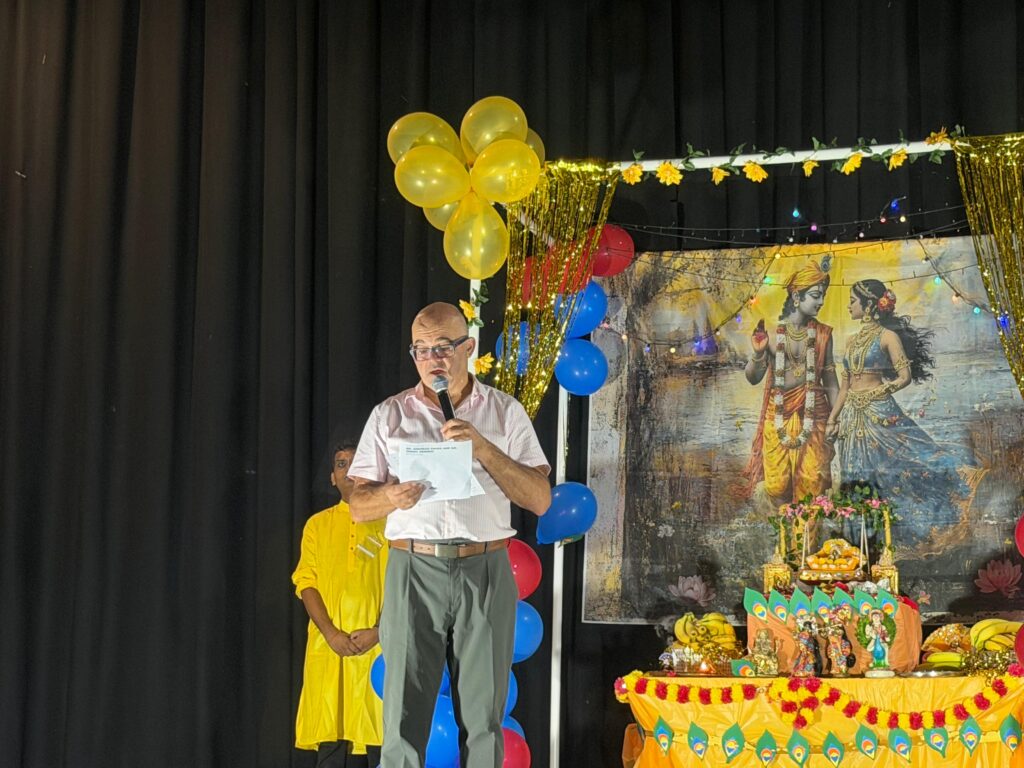
When the General Workers’ Union once again opened its doors to the Hindu community to celebrate the festival of Krishna Janmashtami, it was not simply hosting a cultural or religious event. It was putting into practice the values we have long believed in: respect, inclusion and solidarity.
Malta today is different from the Malta of just a few years ago. In our workplaces, on our streets, in our communities and in our everyday lives, we are meeting more people from different countries, cultures and faiths.
This is a reality that we must approach with maturity.
Diversity should not be a source of fear or division. Nor should it mean that anyone has to set aside their identity, culture or beliefs. On the contrary, a strong society is one that knows who it is, while at the same time having the confidence to respect those who are different.
This is also a fundamental principle of trade unionism. For the Union, a worker is a worker, regardless of the passport they hold, the colour of their skin, their culture or their beliefs. The right to fair working conditions, dignity and respect has no nationality.
As GWU Secretary General Kevin Camilleri said during the celebration, “The GWU is the home of all workers.” This is not simply a phrase. It is a responsibility.
It means that a worker who comes to us should find someone ready to listen. They should find someone prepared to defend them when their rights are not respected. They should find support when they are vulnerable. But it also means finding an open door and a place where they can feel part of a community.
Too often, we speak about foreign workers only in economic terms: how much we need them, which sectors they work in and how much they contribute to the economy.
But behind every statistic there is a person.
A person with a family, a culture, traditions, beliefs and aspirations, and with the same desire we all share: to be respected and to feel part of the society in which they live and work.
That is why integration cannot begin and end at the workplace door.
Brian Bonnici, Secretary of the GWU Hospitality and Food Section, expressed this clearly when he said that the Union’s work “does not stop at the workplace door”. Over the years, we have seen growing trust in the GWU among the Indian community and among workers of many different nationalities.
These workers do not always come to us solely with employment-related problems. Sometimes they are looking for guidance, advice or simply someone who will listen to them.
This trust is something we must continue to build on.
Perhaps one of the most powerful images from the Krishna Janmashtami celebration was that of more than 800 people taking part in the Bhandara/Langar – a traditional spiritual meal offered free of charge to those present.
Among them were third-country nationals, Maltese and European participants, members of the Nigerian community, as well as guests who travelled from England and Italy.
People from different cultures, gathered around the same table.
Manav Sanger, TCN Officer within the GWU, described the occasion as a moment when people from different backgrounds could come together “as one family”.
The concept of seva, which was at the heart of the Bhandara/Langar, is simple yet powerful: serving others generously and without distinction.
It is a value that, although rooted in a different tradition, we can all understand.
Because solidarity is built on the same principle: we do not ask where a person comes from before offering them a helping hand.
In a world where differences can all too easily be used to create fear, prejudice and division, we have a responsibility to choose another path.
This does not mean that we should ignore the challenges that come with a society changing at a rapid pace. Integration must be organised, fair and built on reciprocal rights and responsibilities.
But the starting point must always be respect for the individual.
Malta has always been influenced by different cultures. Our history, our language and our very identity bear witness to centuries of contact with other peoples and cultures. Today, we are living through a new chapter of this reality.
Our choice is whether to build more walls or more bridges.
For the GWU, the path is clear. We will continue to defend the rights of all workers. We will continue to promote respect and dignity in the workplace. And we will continue to create spaces where people from different communities can meet, talk and get to know one another better.
Because ultimately, beyond nationality, culture and belief, there is something that unites us: human dignity, mutual respect and solidarity.
And sometimes, to begin understanding this, all we need to do is sit together around the same table.