GWU calls for stronger social dialogue and continuous training for workers

4 Nov 2026 - Economy | Events | Home | News | Politics | Technology | Trade

GWU calls for stronger social dialogue and continuous training for workers

Kevin Camilleri: “We must turn challenges into opportunities to strengthen productivity, skills and workers’ wages”

The General Workers’ Union (GWU) Secretary General, Kevin Camilleri, has emphasised the need to strengthen social dialogue and increase investment in continuous training for workers, enabling Malta to address economic and technological challenges and transform them into opportunities for growth and development.

Camilleri made these remarks following his participation in a business breakfast organised by the Nationalist Party in connection with Budget 2027, during which several proposals relating to productivity, wages, workers’ skills and the use of Artificial Intelligence were discussed.

In his comments, Camilleri observed that many of the proposals presented by the Nationalist Party have long been discussed among the social partners. While describing the discussion as interesting, he stressed that he would have liked to see greater emphasis on the role of social dialogue in the formulation and implementation of policies that directly affect workers and the economy.

The GWU Secretary General highlighted that continuous training, skills development and professional growth must remain priorities to ensure that workers can adapt to technological changes and the evolving demands of the labour market.

He maintained that the challenges facing Malta, including those associated with digitalisation, automation and Artificial Intelligence, should also be viewed as opportunities to improve productivity, create higher-quality jobs and strengthen prospects for better wages and working conditions.

Productivity, skills, wages and tourism at the centre of discussions

During the business breakfast, the Leader of the Opposition and the Nationalist Party, Alex Borg, outlined four pillars which, according to him, should contribute towards a more competitive economy: productivity, skills, wages and tourism.

Among the proposals presented were incentives to encourage more businesses to invest in automation, digitalisation, robotics and Artificial Intelligence, alongside increased investment in workers’ training and professional development.

Other proposals discussed included reducing bureaucracy, improving efficiency, strengthening innovation and research, and establishing a dedicated authority to align the needs of the economy with workers’ skills while regulating the recruitment of foreign workers.

Regarding wages, the Opposition Leader spoke about incentives linked to productivity and added value, greater opportunities for career progression and the development of new economic sectors offering better salaries.

In the tourism sector, the Nationalist Party proposed that the increase in the eco-contribution should apply between May and October.

The GWU continues to emphasise the importance of placing workers at the centre of every discussion concerning Malta’s economic future, with particular attention to skills development, job quality and improved working conditions.

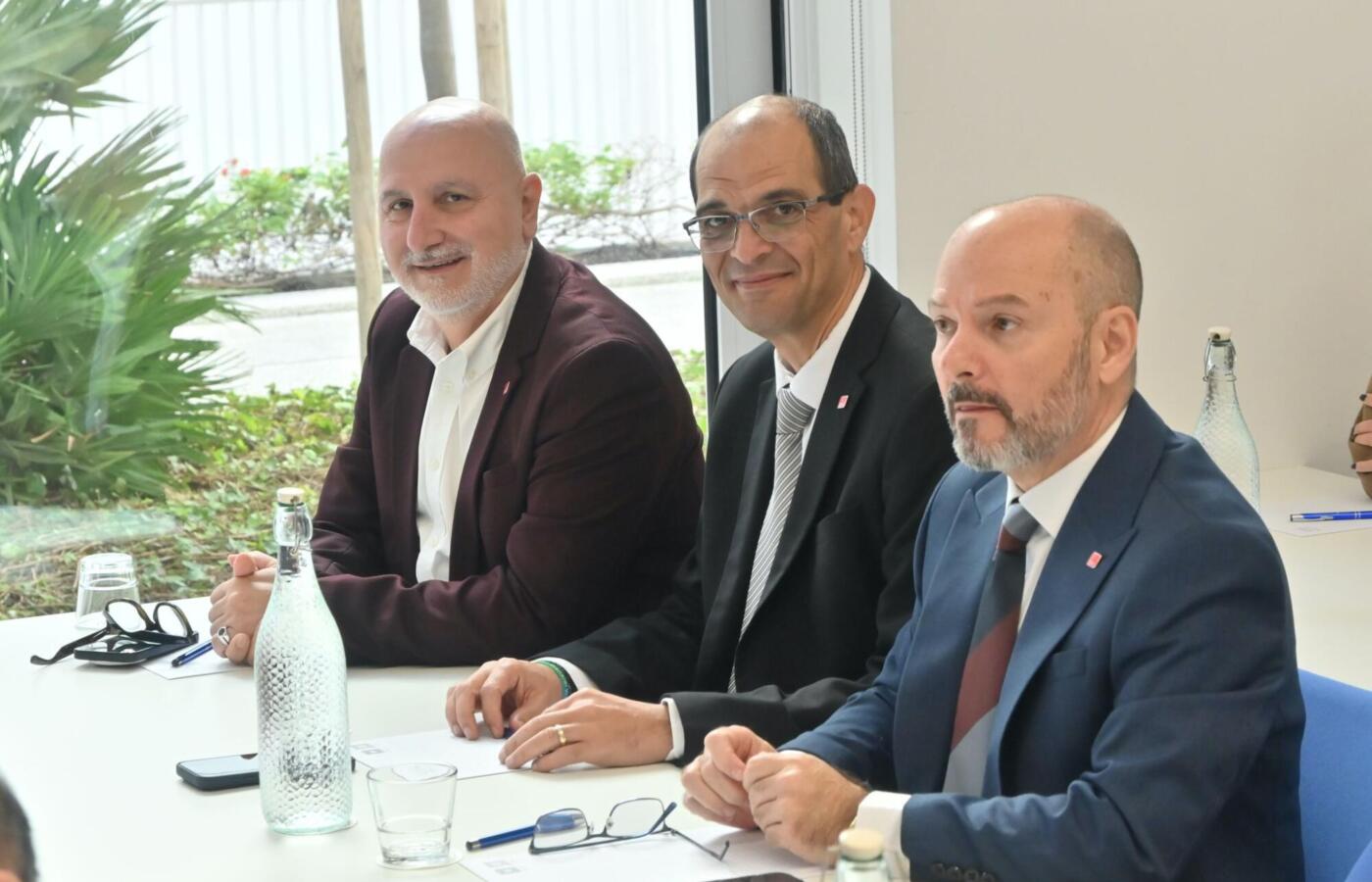
Also attending the business breakfast on behalf of the GWU were Deputy Secretary General Kevin Abela and President Jason Deguara.

« Back