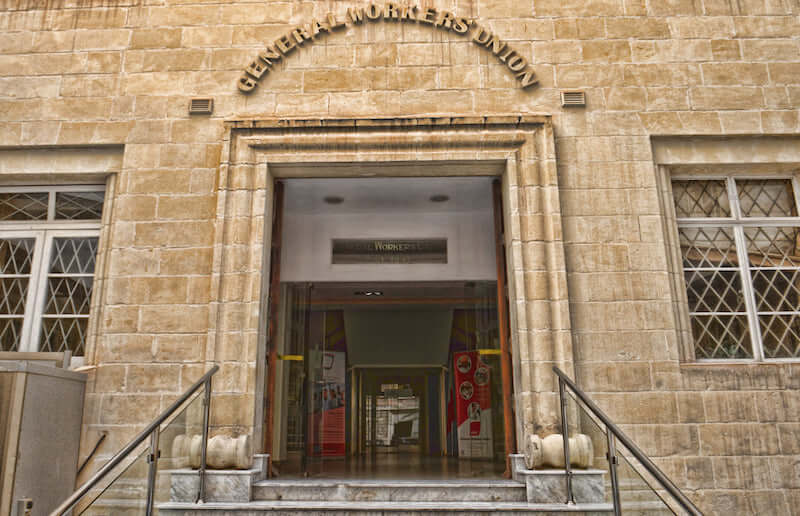
The General Workers’ Union (GWU) is deeply concerned by the filing of a criminal complaint against the Transport, Maritime and Aviation Section Secretary after he communicated with GWU members employed by Resource Support & Services Ltd (RSSL).
On 29 May 2026, RSSL management wrote to the company’s employees outlining proposals that had been put forward during the ongoing negotiations for a collective agreement with the GWU. At that stage, the negotiations had not yet been concluded, and the GWU had not accepted the proposals.
Following this communication, several GWU members contacted their union directly seeking clarification on what had been agreed up to that point and on the union’s position.
The Section Secretary did what every responsible trade union secretary has a duty to do. He provided his members with an update on the actual status of the negotiations. His communication dealt exclusively with matters relating to their employment.
It contained no political content, made no reference to the election, and did not promote or endorse any political position. He was simply responding to questions raised by his members regarding their own collective agreement, which remained under negotiation and had not yet been signed.
Despite this, a criminal complaint was filed by the Electoral Commission, resulting in Jurgen Azzopardi becoming the subject of an investigation for an alleged breach of the election day silence provisions. Consequently, he was questioned under caution by the Criminal Investigation Department (CID) of the Malta Police Force.
The GWU fully respects the role of the Police and recognises that, once a formal complaint is lodged, they have a legal duty to investigate. Our concern is not with the Police. Our concern is with the complaint itself and with what it represents.
A trade union Secretary who keeps members informed about their collective agreement is not campaigning. He is carrying out his responsibilities. Workers’ right to establish and join trade unions, and the right of those unions to organise their activities and communicate with their members, are fundamental rights protected under ILO Convention No. 87 on Freedom of Association and Protection of the Right to Organise and ILO Convention No. 98 on the Right to Organise and Collective Bargaining, both of which have been ratified by Malta.
Furthermore, ILO Convention No. 135 provides additional protection to workers’ representatives against acts that may prejudice them as a result of carrying out their representative functions.
The supervisory bodies of the International Labour Organization (ILO), including the Committee on Freedom of Association, have consistently recognised that trade unions must be free to carry out their legitimate representative functions, including communicating with their members on matters relating to collective bargaining and employment, without improper interference from public authorities.
The GWU has formally informed the European Trade Union Confederation (ETUC) of this matter, and the ETUC shares our serious concerns. Trade union rights are not negotiable, and any attempt to restrict them, regardless of how it is presented, will be challenged by us at every possible level.
GWU Secretary General Kevin Camilleri stated: “The first duty of a trade union Secretary is to the members he represents. When workers contact their union seeking clarity about their own collective agreement, the Secretary has a duty to respond. This is not a breach of any law; it is the most fundamental function of a trade union. The GWU will never accept a situation where a union official faces criminal proceedings simply for carrying out his duties. We will defend our Secretary unequivocally, and we will raise this matter before every relevant international body responsible for safeguarding trade union freedom.”
The GWU’s position is unequivocal. collective bargaining and the representation of workers operate within their own established legal framework, founded on both national legislation and Malta’s international obligations. Electoral legislation neither replaces nor diminishes this legal framework.
A trade union secretary communicating with members about their employment is exercising a right that exists independently of any electoral timetable. We will continue to stand firmly behind our Section Secretary.
We will continue to keep our members informed on every matter affecting their employment. And we will continue to fulfil our responsibilities as a trade union without fear.