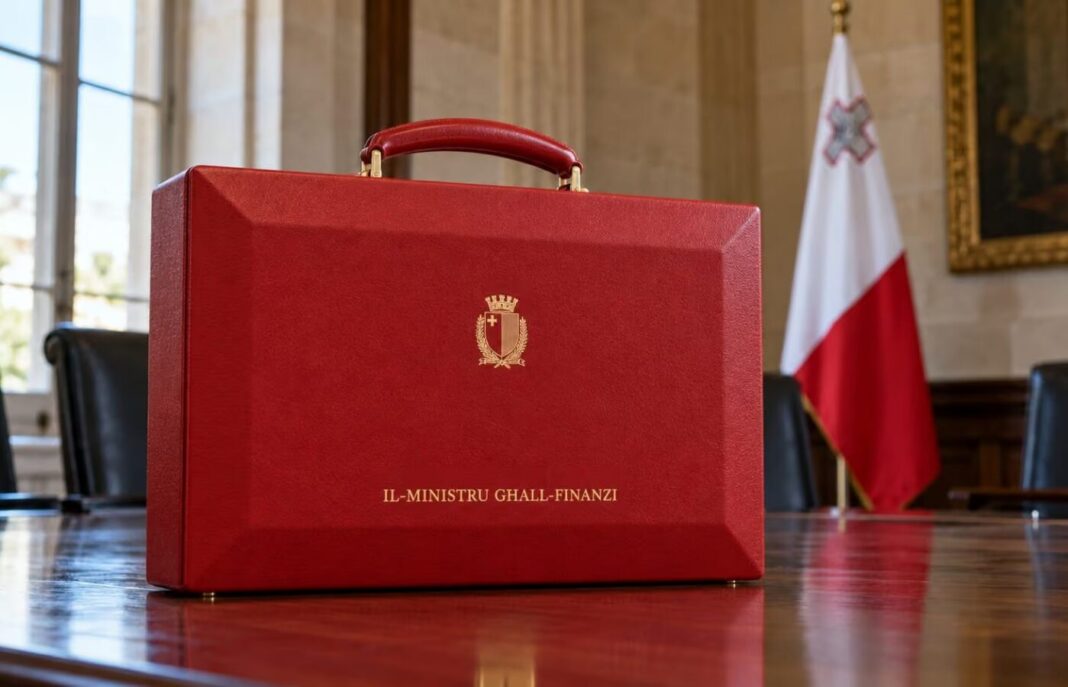
GWU National Council presents its position on Budget 2027
The National Council of the General Workers’ Union (GWU), following discussions and an analysis of the measures announced in Budget 2027, considers this Budget to be a resilient one, incorporating several positive measures aimed at strengthening social protection, safeguarding purchasing power and supporting workers, pensioners and families.
However, the National Council believes that there are still areas requiring further attention and concrete action, particularly regarding the protection of vulnerable workers, improvements in wages and working conditions, and quality of life.
The National Council recognises the importance of the Government continuing to prioritise economic and social stability amid international economic and geopolitical challenges. Nevertheless, it stresses that the country’s economic progress must translate into tangible benefits for workers and their families.
Positive measures for workers and families
Among the measures positively acknowledged by the National Council are the weekly Cost of Living Adjustment (COLA) increase of €6.41, the €10.41 increase in the national minimum wage, inclusive of COLA, the continuation of the Additional COLA Mechanism, and the Super Bonus, through which eligible beneficiaries may receive a grant of up to €1,000.
The National Council also welcomes the continuation of energy price subsidies, for which approximately €400 million has been allocated for 2027. These remain an important instrument in alleviating the pressures of the rising cost of living on families and maintaining stability for businesses.
Quality of life and working conditions
Despite these positive measures, the National Council stresses the need to address structural challenges, including housing costs, traffic congestion, pressures on public services and the need for wages that better reflect the actual cost of living.
In this context, the National Council reiterates the importance of the proposals put forward by the GWU, including the introduction of a Living Income, the right to disconnect, the modernisation of Wage Regulation Orders (WROs), and the implementation of pilot projects for a 32-hour working week.
The National Council also reiterates the GWU’s proposal for COLA to be granted in two payments throughout the year, one in June and the other in December, enabling workers to better cope with price increases throughout the year.
Investment in workers’ training and skills
The National Council emphasises the importance of investment in continuous training, upskilling and reskilling, particularly in light of digitalisation and developments in Artificial Intelligence.
Increased productivity must be accompanied by improvements in wages and employment conditions, while workers must remain at the centre of the economic and digital transition.
The healthcare sector – Investment in infrastructure and workers
The National Council welcomes the announced investment in healthcare infrastructure, including the expansion of the Emergency Department at Mater Dei Hospital, the construction of a new mental health unit, investment in medical imaging services, developments at Gozo General Hospital, and the regeneration of Karin Grech and St Luke’s hospitals.
It also welcomes the measure through which the Government will cover the expenses of a person accompanying an adult patient receiving medical treatment abroad.
However, the National Council stresses that investment in infrastructure must go hand in hand with investment in human resources through a comprehensive strategy addressing recruitment, staff retention, continuous training, workload pressures and improvements in employment conditions.
It is the workers who bring these facilities to life and ensure that patients receive a quality service.
Greater recognition for former members of the Disciplined Forces
The National Council welcomes with satisfaction the measures benefiting former members of the Disciplined Forces, through which eligible individuals who are not in employment will benefit from a €520 increase in their annual bonus.
Following discussions held by the GWU’s Disciplined Forces, Security Officers and Law Enforcement Section with the competent authorities, former members who remain active in the labour market will also benefit from a bonus of €186.68 in 2027, which will be cumulative in subsequent years.
The National Council considers this development a positive outcome of social dialogue and trade union representation.
Older persons and pensioners remain a priority
The National Council welcomes the particular attention given to older persons and pensioners, including the €10 weekly increase in pensions, the increase in the maximum pensionable income for individuals born before 1962, improvements in widows’ and widowers’ pensions, and enhanced financial assistance for those caring for older persons in their own homes.
At the same time, it stresses the need for further investment in active ageing, healthcare services and community care, enabling pensioners to enjoy a dignified, independent and high-quality life.
Gozo – Investment, employment and connectivity
The National Council positively acknowledges the allocation of €141 million for Gozo, together with measures aimed at improving infrastructure and connectivity between the two islands.
However, it stresses the need to create more quality employment opportunities in Gozo, offering better wages and working conditions.
The National Council also believes that the expansion and improvement of the infrastructure at Mġarr Harbour should be considered a national priority. While acknowledging the establishment of a dedicated Task Force, it notes that no concrete commitments regarding the expansion of the harbour or the allocation of specific funds for this purpose were announced in the Budget.
It therefore calls for this project to move from the planning stage to implementation, with a clear commitment regarding funding and the timeframe required for its completion.
Concerns over measures affecting third-country national workers
The National Council expresses its concern regarding measures that will affect third-country national workers (TCNs), particularly those who do not have long-term residence status in Malta.
These include the removal of free public transport, restrictions on access to free childcare services, and increases in fees for work permits and their renewal.
Such measures could place an additional financial burden on these workers, particularly those on low incomes.
The GWU has already initiated discussions with companies and recruitment agencies to explore practical solutions, including the possibility of these entities absorbing part or all of the costs.
The National Council also encourages these workers to join a trade union of their choice to ensure effective representation and adequate protection of their rights.
The National Council reiterates the GWU’s fundamental principle that every worker must be treated with dignity, fairness and respect, irrespective of nationality.
More opportunities for young people
The National Council welcomes measures benefiting young people and students, including increases in student stipends, the extension of free access to gym facilities, and financial assistance of €280 per month for Gozitan students studying in Malta.
However, while recognising the importance of these measures, it stresses the need to give greater attention to young people who have already entered the labour market, particularly regarding wages, employment conditions, training and career progression opportunities, as well as access to affordable housing.
Towards a more sustainable and fairer economy
While recognising the importance of energy subsidies, the National Council believes that further incentives are needed to encourage investment in alternative energy sources and promote a more responsible and efficient use of resources.
The transition towards a more sustainable economy must be a just transition, providing workers with the necessary training and opportunities to ensure that they too benefit from these changes.
The GWU’s commitment to workers
The National Council reiterates the GWU’s commitment to closely monitoring the implementation of Budget 2027 measures and maintaining continuous dialogue with the Government, employers and social partners.
The National Council stresses that the country’s economic success should be measured not only by economic growth but also by the extent to which this growth translates into tangible benefits for workers and their families.
The GWU will continue working towards decent wages, better working conditions, greater protection for vulnerable workers and an improved quality of life. The GWU’s primary objective remains that of building a fairer, more inclusive, sustainable and people-centred economy.











 EN