GWU emphasises the importance of training in the era of Artificial Intelligence

25 Nov 2026 - AI | Economy | Home | News | Politics | Technology

GWU emphasises the importance of training in the era of Artificial Intelligence

The General Workers’ Union (GWU) believes that one of the greatest challenges is ensuring that workers receive the necessary training to keep pace with technological developments, particularly in the field of Artificial Intelligence (AI). This applies not only to workers but also to employers. This transition is necessary and should be viewed as an opportunity rather than a threat.

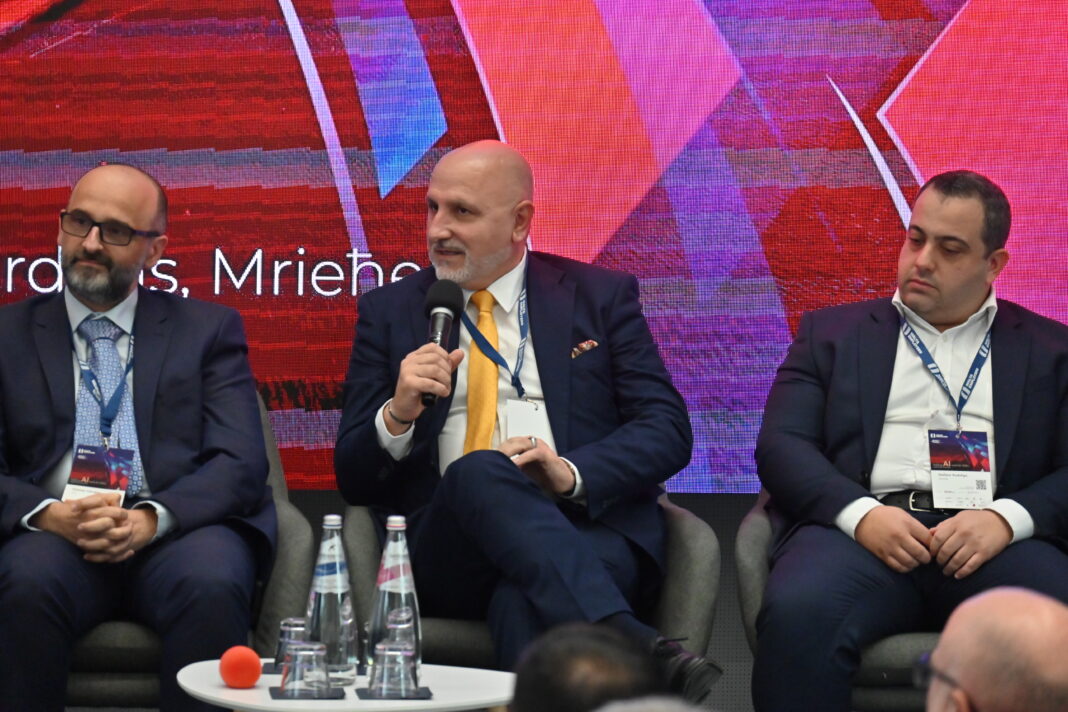
This was stated by GWU Secretary General Kevin Camilleri during a panel discussion on preparing for new skills in the era of Artificial Intelligence, held as part of the SME National Forum 2026, organised by Malta Employers.

The forum brought together representatives of employers, public entities and trade unions, among other stakeholders, with the aim of identifying ways to help small and medium-sized enterprises (SMEs) move from AI awareness to its effective implementation.

Mr Camilleri acknowledged that developing new skills would not be an easy task, particularly for workers who have been performing the same duties for many years. Nevertheless, he expressed confidence that, with the right approach, this challenge could be overcome.

He also emphasised the need for a clear legal and regulatory framework that guarantees transparency, accountability and the protection of workers’ rights in the use of these technologies.

Meanwhile, in his opening address, Malta Employers President Ivan Refalo welcomed the support provided through the Budget for digitalisation and automation processes, including incentives offered by Malta Enterprise.

He expressed hope that these measures would be implemented without delay, describing them as a step in the right direction. However, he stressed that incentives alone were not enough and needed to be accompanied by the necessary skills, ambition and a concrete plan.

Mr Refalo also stated that Malta Employers was ready to contribute to the development and implementation of this plan, while continuing to measure progress, bring stakeholders together and, above all, listen to their views. He concluded by emphasising that the future of work is not something that simply happens to us, but something we choose to shape ourselves.

In a recorded message, Minister for the Economy, Technology and Strategic Projects Silvio Schembri highlighted the importance of preparing workers and businesses for the changes brought about by AI.

He noted that there was already considerable interest in learning about and using AI in Malta. Through the AI4ALL initiative, approximately 50,000 people applied to participate in the training programme, while around 32,000 had already completed the course.

Minister Schembri explained that these individuals were learning how to use AI with greater confidence and how to use this technology safely in their everyday lives. This was also important for employers, as workers would be better prepared to use new technological tools.

He also referred to Budget 2027 and the support being provided to invest in people’s skills and enable businesses to invest in Artificial Intelligence.

Other speakers at the forum included Shadow Minister for the Economy, Technology and Strategic Projects Darren Carabott and Chief Executive Officer of the Malta Digital Innovation Authority (MDIA) Kenneth Brincat.

Malta Employers Director General Kevin J. Borg also presented the findings of a survey conducted among the organisation’s members, focusing on awareness and the use of Artificial Intelligence among small and medium-sized enterprises (SMEs).

Mr Borg explained that 55.6% of respondents were already using Artificial Intelligence regularly, while a further 21.4% were testing or experimenting with its use.

The findings indicate that businesses primarily view AI as a means of improving their operations. Approximately 76% identified efficiency and productivity as the main motivation for adopting this technology.

Among organisations already using Artificial Intelligence, 72% reported improved efficiency or time savings, while 40% reported better analysis and decision-making, and 20% reported reduced costs.

« Back