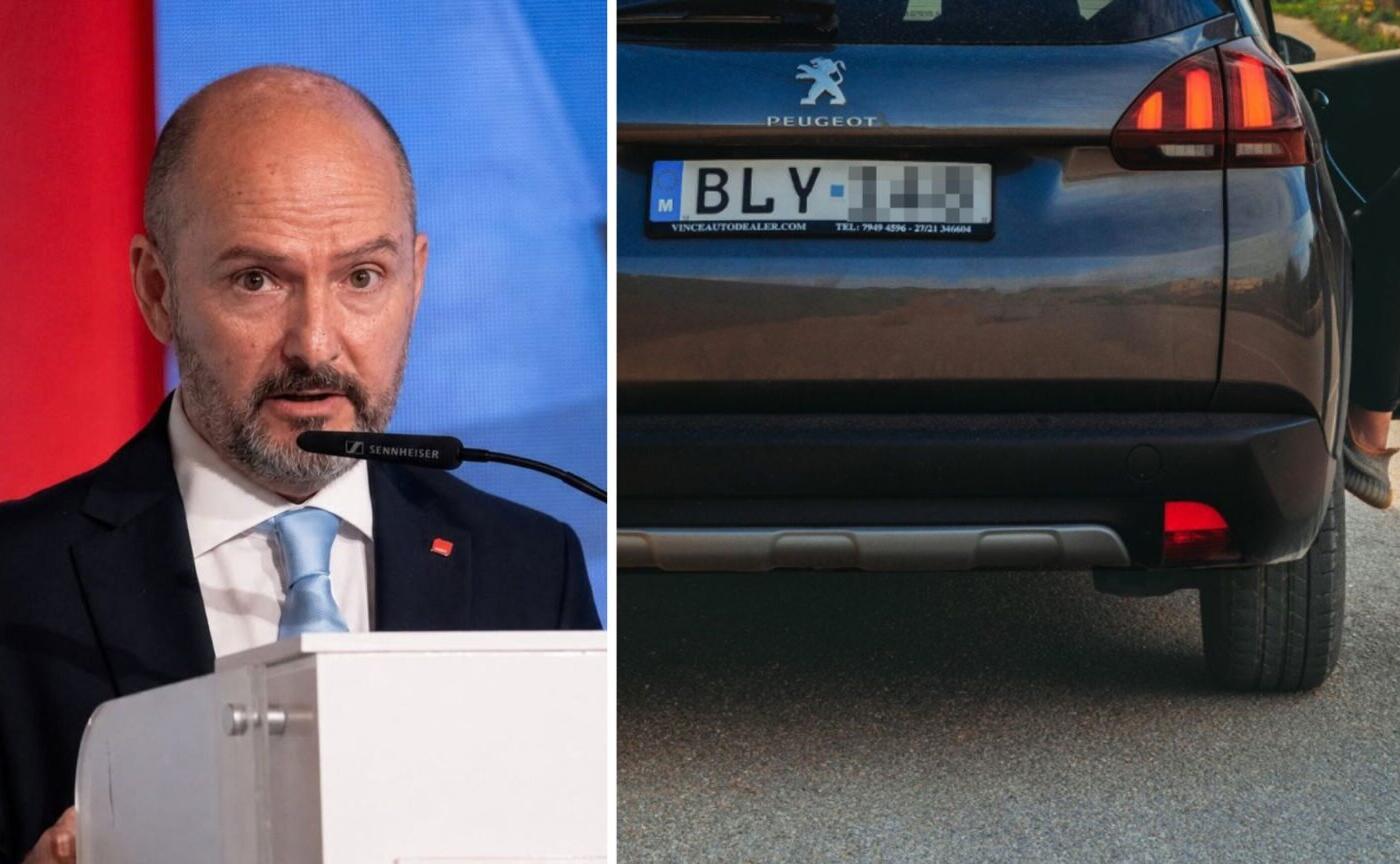
Y-Plates: Balancing workers’ rights with a service consumers can trust
by Kevin Abela, Deputy Secretary General of the General Workers’ Union (GWU)
In recent years, Y-Plate services have become an integral part of Malta’s transport landscape. They have brought greater convenience, accessibility and an alternative for those who, for one reason or another, do not wish to or cannot use a private car or public transport.
However, the rapid growth of this sector has also brought challenges that cannot be ignored. On the one hand, concerns have increased about the impact of additional vehicles on our roads. On the other, important questions have emerged regarding the working conditions of the drivers providing these services.
The need for regulation has therefore been, and remains, essential. Every worker has the right to decent working conditions, fair earnings, adequate rest periods and protection from a system that may pressure them into working excessively long hours simply to make a living.
Good regulation, however, cannot focus on just one aspect. It must consider the bigger picture and, above all, the practical consequences of the measures introduced.
In recent months, consumers have begun to notice changes in Y-Plate services. Prices have increased, but even more concerning is the issue of reliability. There are instances where a customer requests a ride, a driver accepts it and then cancels a few minutes later. The customer is forced to start searching for another vehicle, sometimes repeatedly, before eventually finding someone willing to take them to their destination.
What was once considered a convenient and dependable service is becoming, for some, an experience marked by uncertainty.
But why is this happening?
It would be easy to place all the blame on drivers. However, if we genuinely want to understand what is happening, we need to look deeper.
How are these drivers being paid? What proportion of each fare is retained by the platforms? How much have operating costs increased for vehicle owners and operators? What impact have regulatory changes had on the number of available vehicles and drivers? And, most importantly, is the current system forcing drivers to choose between rides simply to earn a reasonable income?
These are among the questions that deserve clear answers.
We do not want a system in which consumers enjoy low prices at the expense of workers who are forced to accept poor conditions or inadequate earnings. Equally, we do not want a system where solving one problem creates another, leaving consumers with a service that is so expensive or unreliable that it is no longer considered a viable alternative.
Striking the right balance between these two realities is essential.
This brings us to another issue that directly affects our quality of life: traffic congestion.
A mobility service such as Y-Plates, if safe, reliable and reasonably priced, can form part of a broader range of solutions aimed at reducing dependence on private cars. Naturally, it will not solve traffic congestion on its own, but it can provide people with another option when deciding how to travel.
For someone to choose to leave their car at home, however, they must be confident that transport will be available when needed, at an affordable price and within a reasonable waiting time.
And this is precisely where one of the sector’s greatest risks lies.
If Y-Plate services continue to be perceived as increasingly expensive or unreliable, there is a danger that consumer confidence will gradually decline. When people cannot be certain whether an accepted ride will actually take place, how long they will have to wait or how much their journey will cost, they begin looking for alternatives.
To some extent, this is a situation we are already familiar with in public transport.
For many years, one of the main challenges facing the bus service has been, and continues to be, passengers’ confidence in its reliability. It is not enough for a service to exist on paper. It must consistently get passengers where they need to go, on time.
When confidence in a transport service is lost, many people return to the alternative over which they feel they have the greatest control: their private car.
If the same happens with Y-Plates, we will have lost another opportunity to provide the public with more flexible mobility options.
I therefore believe that the time has come for a serious assessment of developments within the sector following the regulatory changes that have been introduced.
This does not mean returning to a system without rules. Quite the opposite. Regulation is necessary to protect both workers and consumers. However, we must ensure that these rules achieve their intended objectives without creating unintended consequences.
Such an assessment should examine working conditions, payment structures, operators’ costs, consumer prices and service reliability. It should also involve all stakeholders with a direct interest in the sector, including drivers, operators, platforms and consumer representatives.
Above all, we need to establish whether the current framework is achieving a fair balance between three interests that should not be viewed as opposing one another: workers, consumers and operators.
Workers have the right to decent employment, fair conditions and earnings that reflect their work. Consumers have the right to a safe, transparent, reliable and reasonably priced service. Those investing in and operating within the sector must have an environment that allows them to provide a sustainable service.
These three objectives can, and should, go hand in hand.
If there are signs that something within the system is not functioning as intended, we should not wait until the problems become more serious and public confidence deteriorates further.
Y-Plate services represented an important innovation in the way we travel around Malta. It would be a mistake to allow them to lose their relevance because of an imbalance between regulation, the sector’s economic realities and consumer needs.
Ultimately, the success of this service cannot be measured solely by the number of vehicles on the roads or the number of journeys completed each day. It must also be measured by whether workers enjoy fair conditions, whether operators can remain financially sustainable and, above all, whether consumers can trust the service they are paying for.
The objective should be clear: a Y-Plate service that works for passengers, but also for those who depend on it for their livelihood.











 EN
EN