As EU leaders meet in Brussels Malta must support an approach that recognises that economic performance and social standards are mutually reinforcing, writes Josef Bugeja
This month, during the European Council, EU leaders will decide how to reinforce Europe’s competitiveness at a time of mounting economic pressure.
Two different approaches are emerging in the European debate. One places its emphasis on deregulation and reduced labour protections as a route to growth. The other focuses on strategic investment, coordinated industrial policy and quality jobs as the foundation of long-term resilience.
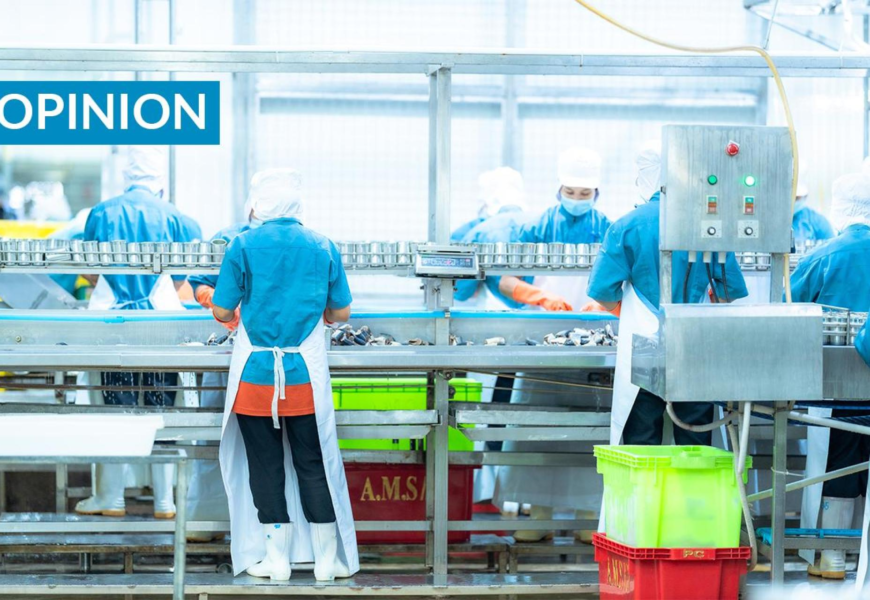
There is no denying the seriousness of the challenges facing Europe. Geopolitical tensions, trade disruptions and armed conflicts are placing sustained pressure on the European economy. According to European Commission figures, 27,000 manufacturing jobs have been lost per month over the last two years, and restructuring processes are no longer limited to traditional industry.
Malta, as a small and highly open economy, is particularly sensitive to these shifts. Our dependence on external markets, tourism flows and international trade means that instability beyond our shores quickly translates into pressure at home. European workers are understandably concerned.
Some argue that Europe’s competitiveness problem stems from excessive regulation and overly protective labour standards. They advocate weakening collective bargaining systems and introducing new corporate regimes that could operate outside established national frameworks. Any initiative that risks undermining employment law, collective agreements or worker representation would weaken, rather than strengthen, Europe’s economic foundations.
Europe’s industrial challenges are not the result of excessive workers’ rights. The evidence points instead to an investment gap and the absence of a sufficiently coordinated, mission-led industrial strategy.
While the need for investment grows, significant corporate revenues across Europe are being channelled towards dividends and share buybacks instead of productive reinvestment. At the same time, European businesses invest considerably less in research and development than major global competitors. This is where the competitiveness gap lies.
From the perspective of the General Workers’ Union, competitiveness must be understood in its full economic context. Wages are not merely a cost item; they sustain domestic demand, support local businesses and create incentives for firms to invest. When wages grow responsibly alongside productivity, internal markets strengthen. When wages are suppressed, demand weakens and investment suffers.
Europe requires an investment leap– Josef Bugeja
Strong collective bargaining systems contribute to stability and predictability in labour relations. They are not an obstacle to competitiveness; they are part of its infrastructure.
Europe requires an investment leap, including common European financing instruments alongside legislation that strengthens quality employment across sectors. A binding Quality Jobs Act should raise standards, address job quality deficits, and support both green and digital transitions in a structured and fair manner.
Public procurement rules must also evolve. Public funds should support enterprises that create quality jobs, invest in skills and respect social dialogue. The lowest price does not necessarily represent best value for society.
Competitiveness is also built on the broader ecosystem of public goods. Education systems sustain innovation and skills formation. Healthcare systems maintain workforce productivity. Infrastructure enables trade and industrial
development. Stable democratic institutions and effective enforcement ensure fair competition and legal certainty. These are not peripheral considerations; they are strategic assets.
As EU leaders meet in Brussels, Malta has an opportunity to support a balanced approach that recognises that economic performance and social standards are mutually reinforcing. A strategy centred on investment, productivity and quality jobs offers a more sustainable path than one focused primarily on deregulation.
Europe’s competitiveness will not be secured by weakening rights. It will be secured by strengthening the real economy and ensuring that growth translates into stability, resilience and shared prosperity.
That is the direction that deserves support.
Josef Bugeja is the secretary general of the GWU.