Strong trade unions are needed now more than ever to build a world of work founded on sustainable development that ensures decent work for all
Globalisation, demographic, environmental and technological changes are transforming labour markets today and will determine those of the future. The General Workers’ Union, Malta’s largest trade union, is aware of the need to address the harsh realities many workers in Malta face today.
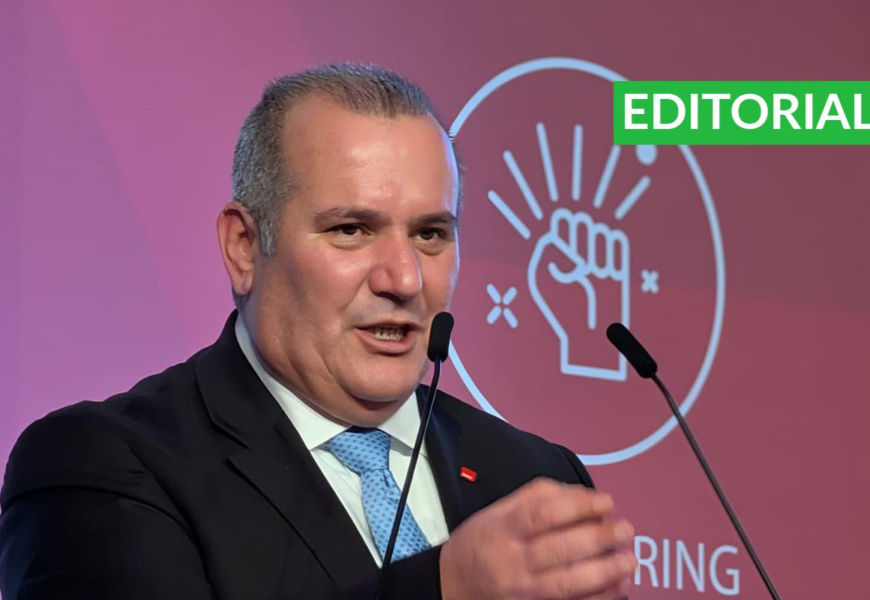
Speaking at the GWU congress, general secretary Josef Bugeja confirmed that he plans to step down after 10 years in the role. He argued: “The GWU is currently in a stable place. We used to think of a union man as a Maltese white man. That is no longer the case,” adding that the union today has members from 30 nationalities.
Bugeja has indeed been a pragmatic trade unionist who understands the role of trade unions today and how best to manage the transition.
Until a few years ago, the larger local trade unions mainly represented workers’ interests in the public sector. Today, the local labour market is increasingly characterised by the growing number of third-country nationals who work in both the public and private sectors.
The GWU is facing the challenge of organising and servicing emerging or traditionally under-represented groups of workers. It addresses the needs of workers in the informal and gig economies, many of whom are young workers supporting their families in non-EU countries.
Of course, there are many obstacles to organising and servicing workers in the platform economy, where precarious work conditions often prevail. Most of these workers realise that the GWU, with its long experience in defending workers’ rights, is the best advocate for protecting their rights.
In a fast-changing social context, the GWU is engaging in inclusive and effective social dialogue to enhance decent work. On broader socio-economic and sustainable development issues, it makes valid contributions to the debate on the need to fight the marginalisation of vulnerable sections of society and on how best to optimise workers’ quality of life.
As the income and wealth gap keeps widening, trade unions must steer clear of polarised political positions and focus solely on how best to serve their members by fighting workers’ exploitation, protecting their health and safety rights and encouraging social mobility through good employment practices.
They must use tools such as foresight and scenario thinking to address economic uncertainty, anticipate change, explore possible futures and enable transformational action. The GWU has, so far, shown great resilience and a remarkable capability to revitalise itself in innovative ways.
During the GWU congress, the union’s TCN official, Manav Kumar, said: “I am honoured to be the first Indian and the first TCN to speak here as an official delegate representing many others who do not yet have a voice. We do not ask for special treatment. We seek equal treatment, equal pay for the same work and equal respect.”
Of course, the country’s socio-economic challenges remain daunting. The importance of shifting focus from labour-intensive economic activities to investment in enhanced human and technological capital must remain the top priority of policymakers.
It is understandable that the significant labour market changes over the last several years are causing concern among some sections of our society. Still, societal leaders must work to promote harmonious integration of foreign workers rather than inflame xenophobia through rhetoric that divides rather than unites all those who work to keep the economy and public services going.
The GWU is successfully managing its transition to maintain its relevance in Maltese society. This bodes well for the future. Strong trade unions are needed now more than ever to build a world of work founded on sustainable development that ensures decent work for all.