GWU delegation attends Conference on Artificial Intelligence (AI) and the Future ofWork

7 Apr 2026 - Economy | Home | News | Politics | Technology | Trade | uncategorized | World and Chronicle

GWU delegation attends Conference on Artificial Intelligence (AI) and the Future ofWork

GWU insists that Artificial Intelligence (AI) must help workers and not be a hindrance

A delegation from the Professionals, Finance & Services Section of the General Workers’ Union (GWU) has returned from Sofia, Bulgaria, after taking part in the final conference hosted by CITUB (The Confederation of Independent Trade Unions of Bulgaria). The two-year European project, TransformWork2, focused on how Artificial Intelligence (AI) and Algorithmic Management (AM) are reshaping the future of work.

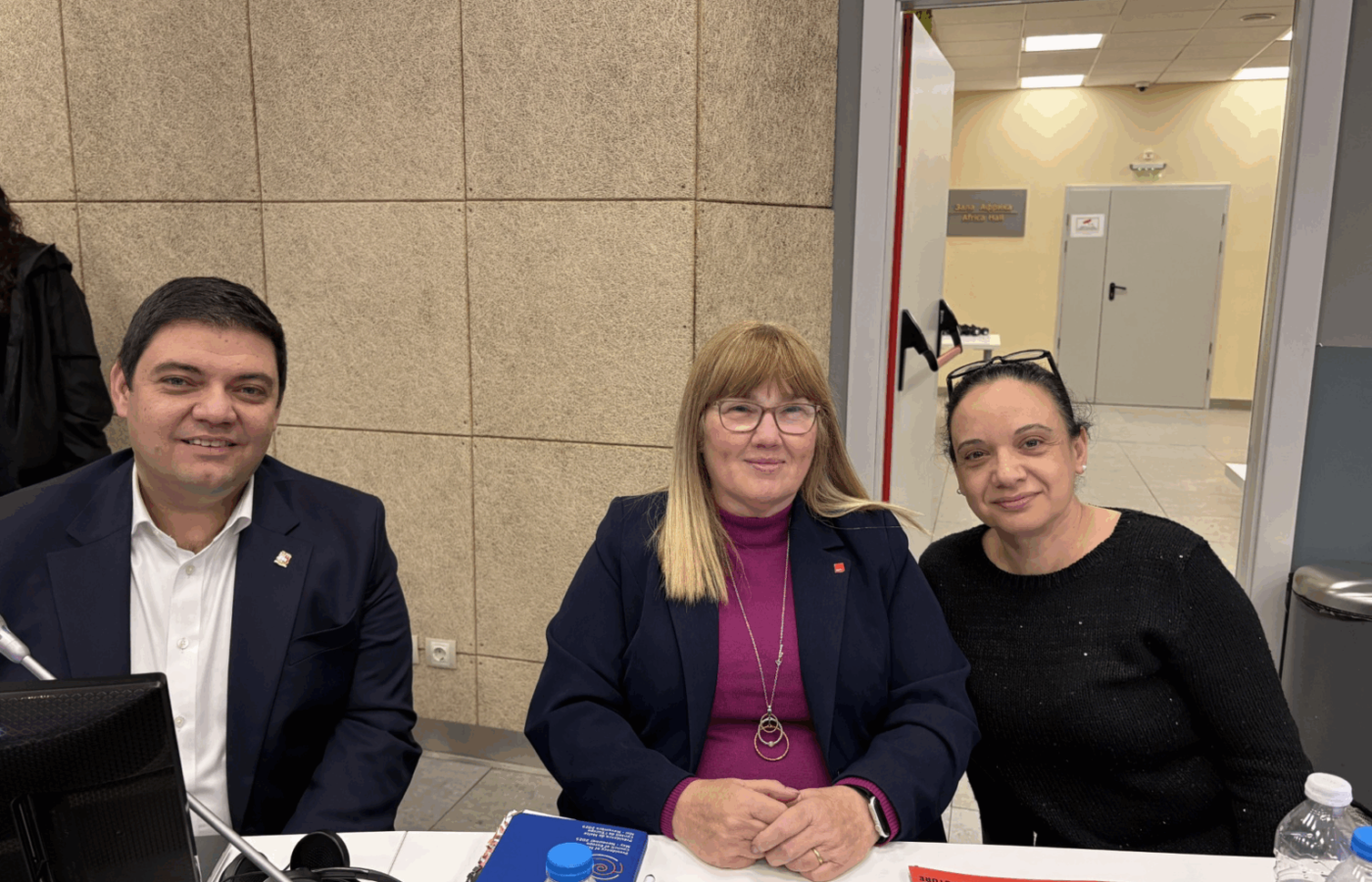
The delegation was made up of the Section Secretary Riccarda Darmanin, Karen Abela, and Professor Alexei Dingli, who carried out the research on behalf of the Union. The GWU, together with the Malta Chamber, worked on this project and joined partners from Bulgaria, Italy, Cyprus, Romania, Ireland, and Poland in this important collaboration.

Putting Workers at the Centre of AI Transformation

From the very beginning, the GWU approached this project with a clear goal: to ensure that AI becomes a tool that supports workers, not one that sidelines them. As new technologies enter our workplaces, the Union has insisted that workers’ rights, dignity, and well-being must remain at the heart of every decision.

Over the past two years, the GWU has worked closely with its European partners to understand how AI is affecting job roles, daily tasks, and organisational structures. A national study was carried out to assess how well prepared are Maltese workplaces for AI and how social dialogue can help manage this transition. The findings confirmed the need for stronger consultation and greater awareness of the impact of AI on workers.

As a key outcome of the project, the partners agreed on a set of practical guidelines to help workplaces adopt AI responsibly and transparently. In Malta, these guidelines will support both employers and workers as the country continues its digital transformation.

A Key Moment: The “Job-Hiring Apocalypse”

One of the most memorable contributions at the Sofia conference came from Prof. Alexei Dingli, who presented his research on what he described as the “job-hiring apocalypse.” He explained how AI-driven recruitment tools are rapidly becoming mainstream and how they are expected to drastically reduce demand for certain roles, while increasing demand for others.

He noted that some white-collar jobs are at risk as generative AI continues to deliver increasingly strong results. At the same time, new roles such as big-data specialists and fintech engineers are among the most sought-after. In contrast, clerical positions, bookkeeping, and other repetitive tasks are declining quickly. According to Prof. Dingli, the jobs most vulnerable to AI are those whose core functions can be performed or significantly supported by software.

He concluded with a powerful message: the future will not belong to those who try to compete with AI, but to those who acquire the skills to use it effectively and control it wisely.

The project ends, but our work continues

Although TransformWork2 has now come to an end, the GWU’s commitment to this subject is far from over. AI is advancing at a rapid pace, and the Union will continue working to ensure that workers have a strong voice in how these technologies are introduced and used in the workplace.

The GWU will continue to advocate for: 

• transparent and fair AI systems, 

• proper consultation with workers, 

• continuous training and skills development, and 

• protective measures that shield workers from abuse or unfair treatment.

As AI becomes more common in Maltese workplaces, the Union’s message remains clear: technology must be a tool that helps workers, not one that hinders them or threatens their daily bread.

« Back